
Can a chemical peel help with acne scars?
Acne scars come in different depths, and the answer to this question starts with which kind you have. One primary document sorts them in two passages.
What the document says
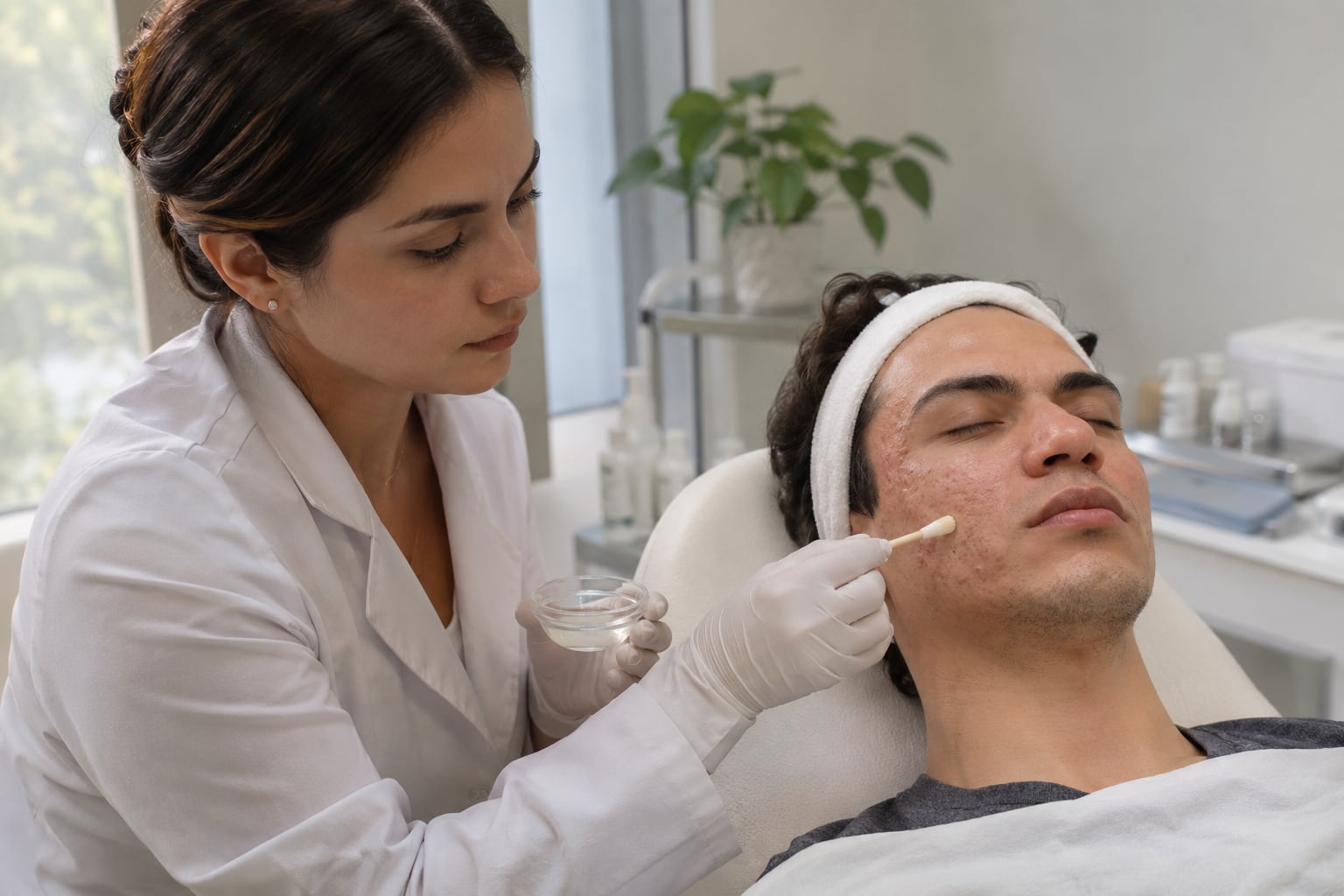
A peel can be on the table for acne scars. my.clevelandclinic.org names acne scarring in one passage: "This choice may be best if you have uneven or moderate skin discoloring, age spots, acne scarring or fine-to-moderate wrinkles." A second passage names deep acne scars: "This choice may be best if you have moderate lines and wrinkles, extensive sun-damaged skin, deep acne scars, blotchy skin, and/or precancerous growths called actinic keratosis."
The directive inside the passages
Decide whether your scars are acne scarring or deep acne scars. The document draws that line, so you should draw it too. Both passages say "may be best", which makes each one a starting point and not a promise.
Steps before you book
- Photograph the scars in daylight so you can point to them.
- Write down whether you would call them shallow or deep.
- Ask the provider which of the two descriptions fits your skin.
- Ask what result to expect, in plain words you can repeat back.
- Read a page on acne scars and how to get rid of them so the terms are familiar.
Two readings for comparison
A split-face study of trichloroacetic acid and phenol spot peels for freckles shows how a peel comparison is written up. A procedure page on chemical peels from plasticsurgery.org describes the treatment itself, which gives background for the scar passages above.
If a passage is unclear
At a Saline, Michigan consultation, ask the provider to point to the exact line in writing that applies to your scars. A line you cannot restate in your own words is one to ask about again.